Introduction
Are your ROAS figures stagnating despite significant ad spend? Are your meta ads andromeda campaigns feeling more like a black hole than a growth engine? In an increasingly competitive digital landscape, where average conversion rates hover around a mere 2-3%, many businesses struggle to achieve meaningful ROI from their Meta Ad efforts. The common misconception is that simply “boosting a post” or running basic traffic campaigns constitutes effective advertising. This couldn’t be further from the truth. This comprehensive guide will demystify the intricacies of Meta Ads, unveiling the “Andromeda” framework – a powerful, data-driven methodology to construct campaigns that don’t just reach audiences, but consistently convert them, propelling your business into a new orbit of profitability.
Core Strategy Overview
The Andromeda strategy for meta ads andromeda is built on three core pillars: **Precision Targeting**, **Irresistible Creative-to-Offer Alignment**, and **Aggressive Data-Driven Optimization**. Unlike generic approaches, Andromeda focuses on creating a symbiotic relationship between your audience, your ad content, and your desired business outcome. It’s about building a campaign ecosystem where each element supports and amplifies the others, leading to predictable high-performance results. We aim for ROAS figures often exceeding 4x, significantly above the industry average, by meticulously aligning every strategic decision with clear conversion goals. This framework transforms Meta Ads from a cost center into a powerful, scalable revenue generator.
Key Tools & Platforms
Mastering meta ads andromeda requires proficiency with several crucial tools and platforms:
- Meta Ads Manager: The primary interface for campaign creation, management, and reporting.
- Use Cases: Budgeting, targeting, ad set creation, campaign monitoring.
- Pros: Comprehensive features, granular control, vast audience reach.
- Cons: Can be overwhelming for beginners, constant algorithm changes.
- Optimization Tip: Utilize custom columns for essential KPIs and save them as presets for quick analysis.
- Meta Pixel (or Conversion API): Essential for tracking website actions and optimizing ad delivery.
- Use Cases: Event tracking (purchases, leads, views), retargeting, custom audience creation.
- Pros: Provides invaluable conversion data for optimization.
- Cons: Ad blockers can affect accuracy; requires proper implementation.
- Optimization Tip: Implement Conversion API alongside the Pixel for enhanced data accuracy and resilience.
- Creative Tools (Canva, Adobe Creative Suite): For designing visually appealing and high-performing ad creatives.
- Use Cases: Image, video, and carousel ad creation.
- Pros: Enhances ad appeal and CTR.
- Cons: Requires design skills or budget for designers.
- Optimization Tip: A/B test various creative formats and messages to identify top performers.
- UTM Tagging Tools: For precise source tracking in Google Analytics or other analytics platforms.
- Use Cases: Attributing conversions to specific Meta ad campaigns, ad sets, or ads.
- Pros: Provides deep insights into campaign effectiveness beyond Meta’s reporting.
- Cons: Requires consistent implementation.
- Optimization Tip: Develop a standardized UTM naming convention for consistency.
- CRM (e.g., HubSpot, Salesforce): For managing leads generated from Meta Ads.
- Use Cases: Lead nurturing, sales tracking, identifying high-value customers.
- Pros: Connects ad efforts directly to sales outcomes.
- Cons: Requires integration and ongoing data management.
- Optimization Tip: Sync CRM data with Meta for custom audience building and lookalikes.
Campaign Setup & Structure
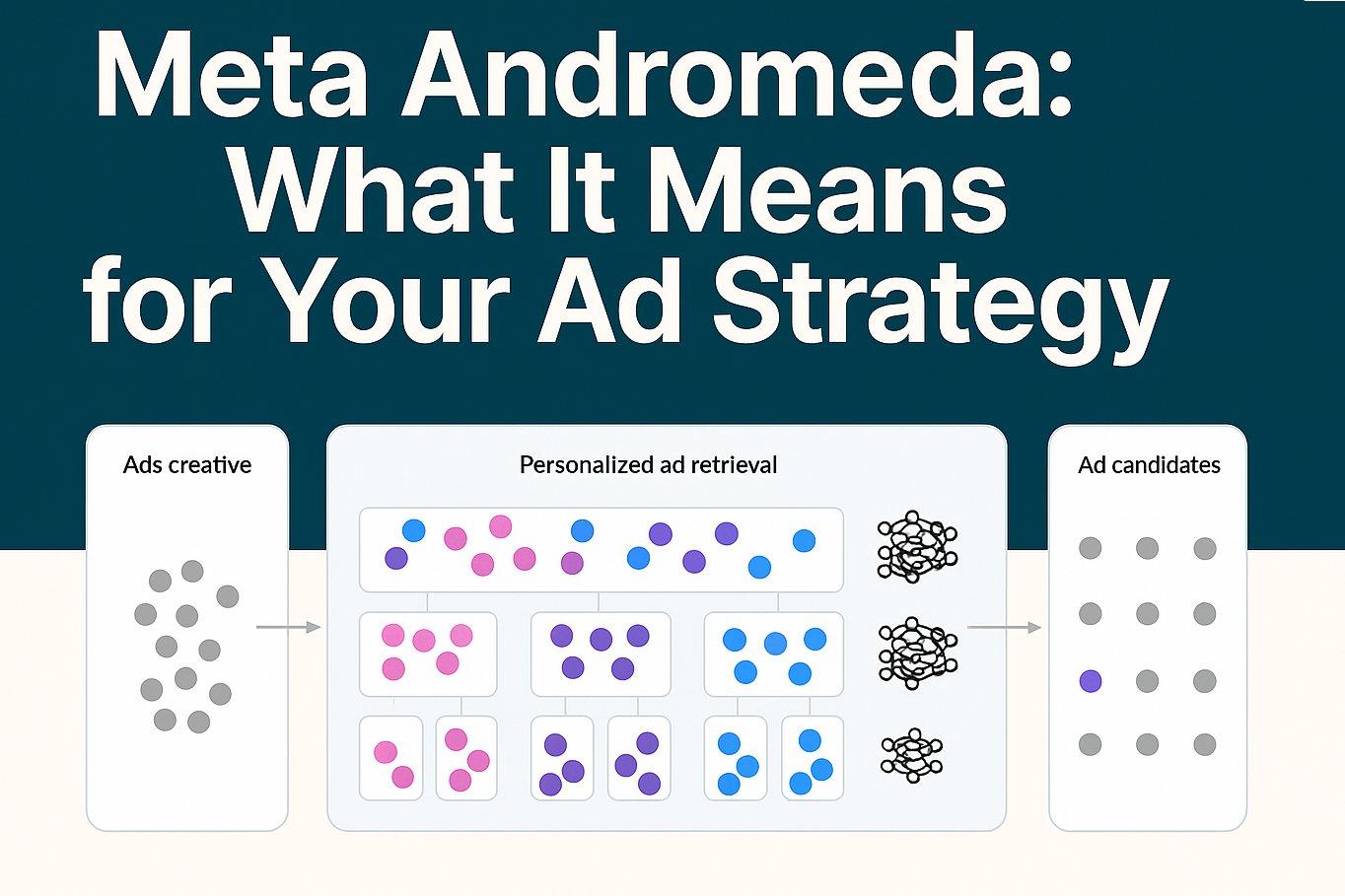
Setting up your meta ads andromeda campaign with the right structure is foundational for success.
Budgeting Strategy
Start with a dedicated testing budget, typically 10-20% of your total ad spend, focused on audience and creative validation. For scaling, employ Campaign Budget Optimization (CBO) once winning ad sets are identified, allowing Meta to dynamically allocate budget to the best performers. A common starting point for a testing budget might be $100-$300 per day spread across multiple ad sets.
Precision Targeting
Beyond basic demographics, leverage custom audiences (website visitors, customer lists) and lookalike audiences (1-3% of your best customers). For prospecting, delve into interest-based targeting with layered interests, or explore Advantage+ Audiences for broad machine learning optimization. For instance, instead of just “fitness equipment,” target “fitness equipment” + “online shopping” + “health and wellness magazines” to narrow down to more intent-driven users.
Irresistible Creatives
Your creatives must immediately halt the scroll. Focus on high-quality visuals (images or videos) that demonstrate your product’s value proposition clearly. Use catchy headlines and ad copy that directly addresses pain points and offers solutions. Brands that refresh creatives every 7 days improve CTR by an average of 15-20%, keeping ad fatigue at bay. Include a clear, compelling call-to-action (CTA).
Flawless Tracking
Ensure your Meta Pixel and Conversion API are correctly installed and firing for all critical events (ViewContent, AddToCart, InitiateCheckout, Purchase). Verify event matching quality is “Good” or “Excellent” in Events Manager. This data is the lifeblood of your digital marketing strategist efforts, preventing wasted ad spend and enabling accurate optimization.
Optimization & Scaling Tactics
Once your meta ads andromeda campaign is live, continuous optimization is paramount.
- A/B Testing: Systematically test ad creative variations, headline iterations, and audience segments. Don’t test more than one major variable at a time. Small, iterative changes based on data lead to significant gains over time.
- Creative Refresh: Ad creative fatigue is real. Monitor frequency and CTR. Once CTR starts to drop or frequency exceeds 3-4, it’s time for new creatives. Brands refreshing creatives weekly see a 12% higher ROAS.
- Bid Strategies: For new campaigns, start with “Lowest Cost” with a cap for control, or “Cost Per Result Goal” if you have consistent CPA data. Once campaigns stabilize, explore “High Volume” or “Value Optimization” for scaling purchase conversions.
- Audience Scaling: Initially, expand lookalike audiences (from 1% to 5-10%) and test broad Advantage+ Audiences. If performance holds, consider international expansion with localized creatives. Segmenting audiences by performance within an ad set can reveal hidden gems.
Common Mistakes to Avoid
Even seasoned marketers make mistakes that derail their meta ads andromeda campaigns.
- Ignoring the Pixel/Conversion API: Running ads without proper tracking is like driving blindfolded. Always verify your event setup. Fixing tracking errors can instantly improve reported ROAS by 30%+.
- Impatience: Meta’s algorithm needs data to optimize. Don’t make drastic changes within the first 3-5 days of a campaign. Allow it time to exit the learning phase. Premature optimization leads to inconsistent results.
- Lack of Creative Variety: Using only a single image or video for weeks on end leads to ad fatigue and diminishing returns. Constantly test fresh creative concepts.
- Broad Targeting with Small Budgets: If your budget is limited, focus on niche, high-intent audiences. Broad targeting is for campaigns with significant budget and ample historical data for Meta’s AI to leverage.
- Setting It and Forgetting It: Ad campaigns require daily monitoring and weekly deep dives. The digital landscape changes rapidly; your optimization efforts must keep pace.
KPIs & Performance Metrics
Understanding the right metrics for your meta ads andromeda campaigns is non-negotiable.
- ROAS (Return on Ad Spend): Your ultimate measure of profitability. (Revenue / Ad Spend). Aim for 3x+ for sustainable growth.
- CPA (Cost Per Acquisition): How much it costs to acquire a customer or lead. Your maximum CPA should be well below your Customer Lifetime Value (CLTV).
- CTR (Click-Through Rate): Indicates ad relevance. A high CTR suggests your creative resonates. (Clicks / Impressions * 100%). Aim for 1-2%+ for prospecting, higher for retargeting.
- CPC (Cost Per Click): How much you pay for each click. Lower CPCs generally mean more affordable traffic.
- LTV (Lifetime Value): The total revenue a customer is expected to generate throughout their relationship with your business. This informs your sustainable CPA. A significant increase in LTV allows for a higher allowable CPA, unlocking more scaling opportunities.
Analyze these metrics daily to identify trends and make informed decisions, pivoting strategies as data dictates.
Automation & Growth Opportunities
Automate repetitive tasks to free up time for strategic thinking in your meta ads andromeda campaigns.
- Automated Rules: Use Meta’s automated rules for budget management (e.g., pause ad sets with CPA above X, increase budget for ad sets with ROAS above Y).
- Dynamic Creative Optimization (DCO): Let Meta combine different creative assets (images, videos, headlines, copy) to create permutations, reducing manual A/B testing efforts.
- Leverage AI Ad Copy Generators: Tools like Jasper or Copy.ai can generate multiple ad copy variations rapidly, saving time and sparking new ideas.
- Integrate with CRMs: Automate lead transfer from Meta Lead Ads directly into your CRM for immediate follow-up.
- Growth Opportunities: Explore new placements (e.g., Reels, Audience Network) and diversify your ad account strategy beyond a single campaign objective. Consider integrating with other channels, like email marketing, for a holistic customer journey.
Case Study or Practical Example
Consider “Brand X,” a direct-to-consumer (DTC) e-commerce brand selling sustainable coffee. Initially, meta ads andromeda campaigns had a blended ROAS of 1.8x, barely breaking even. We implemented the Andromeda framework:
- Precision Targeting: Switched from broad interest-based audiences to 1% lookalikes of purchasers (top 25% by AOV) and retargeting ads segmented by cart abandoners vs. recent website visitors.
- Creative Alignment: Developed new video creatives showcasing the sustainable sourcing and ethical practices of Brand X, coupled with a compelling discount offer for first-time buyers.
- Optimization: Employed Advantage+ Shopping Campaigns with a focus on Purchase conversions, allowing Meta’s AI to find optimal placements and audiences. We refreshed creatives weekly based on CTR and conversion rate data.
Results: Within 90 days, Brand X’s campaign ROAS soared to 4.2x, increasing conversion rates by 65%. Their CPA dropped by 38%, and monthly revenue from Meta Ads increased by over $50,000. This tangible improvement underscores the power of a structured, data-driven approach to meta ads andromeda.
Conclusion
The Andromeda framework for meta ads andromeda offers a clear, actionable roadmap to transcend mediocre performance and achieve significant, sustainable growth. By meticulously focusing on precision targeting, optimizing creative-to-offer alignment, and relentlessly driving data-backed optimization, you can transform your Meta Ad efforts into a powerful revenue engine. Don’t settle for average; embrace the Andromeda strategy to unlock unparalleled conversion success. Are you ready to elevate your campaigns? Apply these strategies, track your results diligently, and watch your business thrive. For a deeper dive into optimizing your specific ad accounts or to develop a tailored Andromeda strategy, book a complimentary strategy call with our team today and discover how we can help you achieve your ambitious marketing goals.
FAQs
Q1: How much budget do I need to start a successful Meta Ads Andromeda campaign?
A1: While there’s no fixed answer, we recommend a minimum daily budget of $20-$50 per ad set for meaningful data collection. For a comprehensive meta ads andromeda strategy involving testing, aim for at least $1,000-$2,000 per month to start, allowing for sufficient exploration and optimization.
Q2: How often should I refresh my ad creatives?
A2: Generally, aim to refresh your ad creatives every 7-14 days, especially for prospecting campaigns where audience fatigue sets in faster. Monitor frequency and CTR; if CTR begins to decline and frequency rises above 3-4, it’s a strong indicator to introduce new creative variations.
Q3: What’s the most effective targeting strategy for new Meta Ads accounts?
A3: For new accounts without much historical data, start with detailed interest-based targeting, layering interests to create a more defined audience. As you gather Pixel data, quickly transition to Lookalike Audiences (1-3% of website visitors, engaged users, or customer lists) for more scalable and efficient targeting.
Q4: My ROAS is low; what’s the first thing I should check?
A4: The very first thing to check is your conversion tracking setup (Meta Pixel/Conversion API). Ensure all events are firing correctly and event matching quality is “Good.” If tracking is fine, then investigate your ad creatives’ relevance to your audience and the perceived value of your offer. Low ROAS often points to either tracking issues or a disconnect between your ad and your landing page experience. You might need to consult a digital marketing strategist to deep dive.
Q5: Should I use CBO (Campaign Budget Optimization) or ABO (Ad Set Budget Optimization)?
A5: For testing, ABO (Ad Set Budget Optimization) gives you more control to allocate specific budgets to different ad sets, which is useful when validating audiences or creatives. For scaling winning strategies, CBO (Campaign Budget Optimization) is generally superior. It allows Meta’s algorithm to dynamically distribute budget to the best-performing ad sets within a campaign, often resulting in lower CPAs and higher ROAS as the system optimizes for overall campaign goals.